
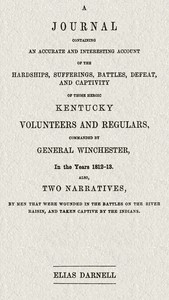
A journal containing an accurate and interesting account of the hardships,…
This isn't a history book written with the benefit of hindsight. It's a diary, penned day by day in 1812, by a young man named Elias Darnell. He joined a regiment of Kentucky volunteers, full of that early-war patriotism, expecting a bit of adventure. What he got was a brutal lesson in reality.
The Story
The journal follows Darnell and his fellow soldiers as they leave their homes and march north toward Detroit. Almost immediately, things go wrong. Supplies are a joke—the promised food and gear never materialize. The men are constantly hungry, often sick, and wearing clothes that fall apart in the rain and mud. Their leadership is chaotic, sending them on pointless marches and making baffling decisions. The real enemy, for most of the journal, isn't the British or Native American forces, but the conditions. Starvation, disease, and exposure pick them off one by one. The climax isn't a grand battle, but a desperate, disorganized retreat after a defeat they saw coming from miles away. Darnell documents the slow erosion of hope, the petty arguments among starving men, and the sheer physical misery of it all.
Why You Should Read It
You should read this because it strips away all the romance of war. There are no glorious charges here. Darnell's voice is honest, frustrated, and sometimes darkly funny in its disbelief at their situation. You feel the grit in the food (when there was any), the ache in their bones from sleeping on frozen ground, and the creeping fear that they'd been forgotten by the country they were fighting for. It's a powerful reminder that history is made by ordinary, cold, and hungry people. The themes are timeless: poor planning, the gap between leaders and the led, and the human capacity to endure absurd levels of suffering.
Final Verdict
This book is perfect for anyone who loves raw, primary-source history. If you're a fan of soldier diaries from any era, this is a foundational one. It's also great for readers who enjoy true survival stories, even if the setting is a military campaign. It's not a long or difficult read, but it is a heavy one. You'll come away with a profound appreciation for a slice of American history that's often overlooked, and a deep respect for the grunts who lived it. Just maybe don't read it while you're eating your lunch.
This masterpiece is free from copyright limitations. You are welcome to share this with anyone.
Ashley Smith
11 months agoI took detailed notes while reading through the chapters and the argument presented in the middle section is particularly compelling. It cleared up a lot of the confusion I had previously.
Barbara Lopez
2 years agoI've been looking for a reliable source on this topic, and the author’s unique perspective adds a fresh layer to the discussion. I'll be citing this in my upcoming project.
Andrew Smith
1 year agoSimply put, the pacing is just right, keeping you engaged. Worth every second.
Emma Sanchez
1 year agoEnjoyed every page.




Margaret Brown
6 months agoMy first impression was quite positive because the way it handles controversial points with balance is quite professional. This should be on the reading list of every serious professional.