
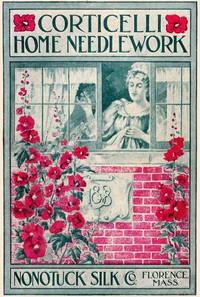
Corticelli Home Needlework, 1898: A Manual of Art, Embroidery and Knitting
Let's clear something up right away: this isn't a book with a plot in the usual sense. There's no hero's journey, unless you count the journey of a ball of silk thread becoming a pair of elaborately embroidered cuffs. 'Corticelli Home Needlework' is a practical guide, published in 1898 by a silk company to sell its products. It's packed with detailed instructions for everything from knitting stockings and baby clothes to creating incredibly complex embroidery for household linens and clothing.
The Story
The 'story' is the quiet narrative of domestic life in 1898. Each page is a snapshot of what was considered essential knowledge for running a home and presenting oneself and one's family to the world. It walks you through creating a 'gentleman's handkerchief case' with specific stitches, shows how to knit lace edging for a pillow sham, and provides patterns for children's garments. The manual assumes a world where these skills are not just hobbies, but duties. The conflict is subtle but ever-present: the tension between the repetitive, often undervalued labor of 'women's work' and the genuine artistry and meticulous care the instructions demand.
Why You Should Read It
I love this book because it's a direct conversation with the past. The anonymous author writes with a clear, patient, and sometimes surprisingly modern voice, explaining complex techniques as if you're sitting across from her. You get a real sense of the standards of beauty and utility from that era. But more than that, you feel the pride of craft. This wasn't just about mending socks; it was about creating beauty within the confines of your home. For anyone who does any kind of handwork today—knitting, embroidery, sewing—it's humbling and inspiring to see these foundational techniques laid out with such care. It connects your hands to theirs across 125 years.
Final Verdict
This is a niche treasure, but a powerful one. It's perfect for history lovers, especially those interested in women's history and material culture. It's a must-read for modern fiber artists and crafters who want to understand the roots of their crafts. And honestly, it's for anyone with a curious mind who enjoys holding a piece of the past in their hands. You won't get a thrilling plot, but you'll get something rarer: an intimate, unedited manual for living from a world long gone. Just be prepared to suddenly have a strong urge to find some silk thread and try 'feather stitching.'
This title is part of the public domain archive. It serves as a testament to our shared literary heritage.
Charles Taylor
11 months agoI decided to give this a try based on a colleague's recommendation, the level of detail in the second half of the book is truly impressive. I appreciate the effort that went into this curation.
Robert Lee
7 months agoAs a long-time follower of this subject matter, the way it challenges the status quo is both daring and well-supported. I am looking forward to the author's next publication.
Michael Harris
2 months agoThis work demonstrates a clear mastery of contemporary theories.
John Smith
3 months agoThe layout is perfect for tablet and e-reader devices.







George Williams
7 months agoI was skeptical about the depth of this book at first, but the concise summaries at the end of each section are a lifesaver. An excellent example of how quality digital books should be formatted.