
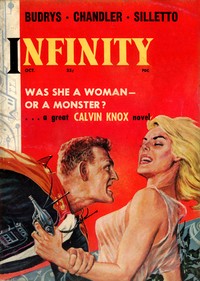
Infiltration by Algis Budrys
Algis Budrys's Infiltration is a Cold War-era science fiction novel that feels unsettlingly relevant today. Published in 1969, it trades flashy space battles for a psychological chess game played in the shadow of mutual assured destruction.
The Story
The story follows Dr. Giles Yurick, a brilliant physicist working on a critical defense project. His world is one of security clearances and constant suspicion. The plot kicks off when Yurick begins receiving strange, coded communications that defy explanation. They appear to come from within his own secure facility, yet no human could have sent them. The messages hint at a terrifying possibility: an enemy has developed a technology so advanced it can create perfect, undetectable replicas of people. Is a 'infiltrant' already among them, watching and learning, ready to replace a key person and sabotage everything? The novel becomes a tense investigation as Yurick and a small, trusted circle try to identify the threat without knowing if the person next to them is still who they say they are.
Why You Should Read It
What makes this book stick with you is its focus on the human cost of paranoia. Budrys isn't just writing about spies; he's writing about identity. The fear isn't of being killed, but of being erased and replaced so completely that no one would ever know. The characters are not action heroes; they're thinkers, bureaucrats, and scientists trapped in an impossible situation. You feel their isolation and the heavy weight of their responsibility. The 'science' in the fiction is light, serving the mood and the central idea rather than getting bogged down in technobabble. It's a thinking person's thriller that proves the most dangerous frontier isn't outer space, but the mind of the person sitting at the desk beside you.
Final Verdict
Infiltration is perfect for readers who love classic sci-fi with a sharp, cerebral edge. If you enjoy the paranoid atmospheres of stories like Invasion of the Body Snatchers or the slow-burn tension of John le Carré, you'll find a lot to love here. It's also a fascinating time capsule of Cold War anxieties. Fair warning: it's a product of its time in pacing and style, so it builds deliberately. But if you let yourself get drawn into its quietly desperate world, the payoff is a chilling and remarkably smart story about trust, identity, and the invisible wars fought in plain sight.
This work has been identified as being free of known copyright restrictions. Preserving history for future generations.
Mary Williams
7 months agoI was skeptical at first, but the flow of the text seems very fluid. Highly recommended.
James Scott
1 year agoI started reading out of curiosity and it challenges the reader's perspective in an intellectual way. I learned so much from this.

Kevin Garcia
1 year agoThe layout is very easy on the eyes.