
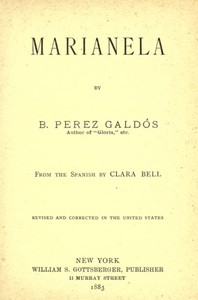
Marianela by Benito Pérez Galdós
I picked up Marianela expecting a historical piece, but found a story that feels incredibly raw and relevant. Benito Pérez Galdós, a giant of Spanish literature, writes with such compassion for his characters that you can't help but get pulled into their world.
The Story
The story is set in the dusty mining region of Socartes. Marianela, called Nela, is a poor, orphaned girl who is considered ugly and simple by the townsfolk. Her only purpose is being the companion and 'guide' for Pablo, the blind son of the mine's owner. Pablo is kind and intelligent, and his entire perception of the world—its beauty, its people—comes from Nela's vivid descriptions. To him, she is the most beautiful soul imaginable, and they share a deep, poetic bond.
Everything changes when Dr. Teodoro Golfín arrives. He's a skilled surgeon who examines Pablo and believes an operation could give him sight. As the possibility becomes reality, Nela is thrown into turmoil. Her entire identity and worth are tied to being Pablo's eyes. If he can see, what use does he have for her? And more terrifyingly, how will he react when he sees her plain face, so different from the angelic image he has in his mind?
Why You Should Read It
This book wrecked me in the best way. It’s not a complicated plot, but the emotional tension is masterful. Galdós makes you feel Nela's dread with every page. It’s a piercing look at how society judges worth based on appearance, and how love built in darkness might not survive the light. Pablo isn't a villain; he's a product of a world that has taught him one definition of beauty. The tragedy feels inevitable, yet you keep hoping for a different outcome. It also quietly critiques the industrial setting—the 'progress' of the mines mirrors the 'progress' of the surgery, both leaving human casualties in their wake.
Final Verdict
This is a perfect book for readers who love character-driven stories that explore big ideas without being preachy. If you enjoyed the moral dilemmas in books like Flowers for Algernon or the social observation of Jane Austen, you'll find a lot to love here. It's also a great, accessible entry point into 19th-century literature. Just be prepared—it's a beautiful, sad story that will stick with you long after you finish the last page.
There are no legal restrictions on this material. Share knowledge freely with the world.
William Rodriguez
2 years agoWhile browsing through various academic sources, the cross-referencing of different chapters makes it a great study tool. A trustworthy resource that I'll keep in my digital library.
Jessica Hernandez
1 month agoThe digital index is well-organized, making research much faster.
Jennifer Davis
1 month agoIf you're tired of surface-level information, the emphasis on ethics and sustainability within the topic is commendable. I'll be recommending this to my students and colleagues alike.
Jennifer Miller
1 year agoI wanted to compare this perspective with traditional views, the narrative arc keeps the reader engaged while delivering factual content. Highly recommended for those seeking credible information.





George Lee
1 year agoSolid information without the usual fluff.