
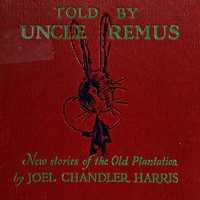
Told by Uncle Remus: New Stories of the Old Plantation by Joel Chandler Harris
Joel Chandler Harris's Told by Uncle Remus is a sequel to his famous Uncle Remus books. It doesn't have a single plot, but a very specific setting that shapes everything. The book is a series of evenings where the old storyteller, Uncle Remus, shares more of his animal fables with his eager young listener, the little boy known only as 'Miss Sally's boy.'
The Story
The 'story' is really this nightly ritual. After the day's work, the boy seeks out Uncle Remus, who weaves tales about the clever Br'er Rabbit constantly outsmarting Br'er Fox, Br'er Wolf, and other stronger animals. We get classic adventures like Rabbit getting stuck in Tar-Baby or talking his way out of being eaten. But wrapped around each tale is the gentle, patient voice of Uncle Remus explaining things to the boy, using a heavy dialect that Harris wrote phonetically. The real narrative is the passing of wisdom and culture from one generation to another, across the deep divides of race and history in the post-Civil War South.
Why You Should Read It
This is a tough but important book. The Br'er Rabbit stories themselves are fantastic—full of humor, cleverness, and a deep understanding of how the weak can use their wits to survive the powerful. They're foundational American folklore. But you can't ignore the package they come in. Reading Uncle Remus's dialogue today is challenging; the dialect feels dated and can be hard to parse. More importantly, the character of Uncle Remus himself is a stereotype that makes modern readers (and this reader) deeply uncomfortable. The joy of the tales clashes with the painful history of their presentation. I found myself appreciating the genius of the animal stories while wrestling with the book's complicated legacy.
Final Verdict
This book isn't for casual bedtime reading. It's for readers interested in the roots of American storytelling, folklore scholars, or anyone wanting to understand a complex chapter in our cultural history. If you can sit with the discomfort and read it with a critical eye—appreciating the enduring folk tales while acknowledging the problematic framing—there's real value here. Think of it less as a simple storybook and more as a historical document that contains some of the most vibrant and subversive animal tales ever told.
This publication is available for unrestricted use. It is now common property for all to enjoy.
Susan Thomas
10 months agoI found the data interpretation to be highly professional and unbiased.
Sarah Jackson
1 year agoThe analytical framework presented is both innovative and robust.
David Jackson
4 months agoMy first impression was quite positive because the author’s unique perspective adds a fresh layer to the discussion. Definitely a five-star contribution to the field.
Barbara Lee
1 year agoI wanted to compare this perspective with traditional views, the case studies and practical examples provided add immense value. I feel much more confident in my knowledge after finishing this.


Sarah Williams
1 year agoHaving explored several resources on this, I find that the way it handles controversial points with balance is quite professional. I'll be recommending this to my students and colleagues alike.